
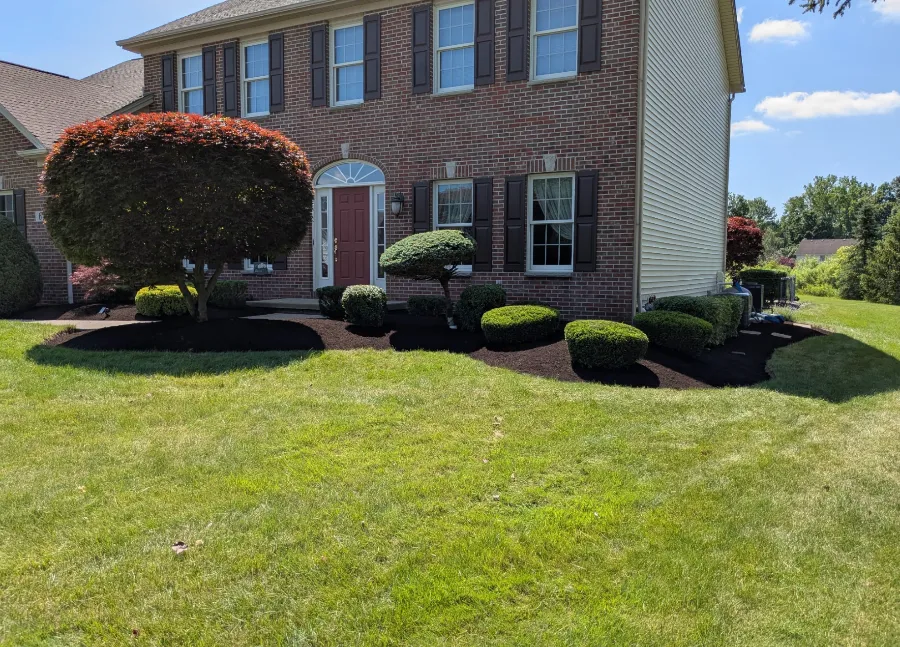
Looking for hedge trimming in Western New York? We trim hedges and shrubs in West Seneca, Hamburg, Lancaster, Elma and nearby towns, with each cut timed to the plant and every clipping cleaned up.
A simple trimming calendar for the Southtowns
Late winter into early spring, before buds break, is the window for summer-flowering shrubs and for structural cuts on overgrown plants. You can see the branch framework with the leaves off, and the plant has a full season to regrow.
Late May through June is the main shaping time for formal hedges like privet, yew and boxwood. The spring flush has grown in and firmed up, so the cut holds its shape.
Mid summer is for a lighter pass to tidy up the second round of growth. Fall is for overgrown shrubs that need bringing back once growth has stopped, plus cleanup cuts on dead or broken wood. The time to leave the shears alone is late August into early fall, when a hard cut pushes soft new growth that the first frost will burn.
Spring-flowering shrubs: trim right after the bloom
Forsythia, lilac, rhododendron, azalea, early spirea and weigela set next year's flower buds on this year's wood, soon after they finish blooming. Cut them in fall or early spring and you cut off the flowers.
The rule is simple: enjoy the bloom, then trim within a few weeks after the petals drop. That gives the plant all summer to grow and set new buds.
Lilacs that have grown into small trees can be renewed by taking out a few of the oldest, thickest stems at the base each year. Over three seasons the whole shrub is replaced with younger wood that flowers lower down, where you can see and smell it.
Summer bloomers and hydrangeas
Shrubs that bloom on new wood, like panicle hydrangea, smooth hydrangea, summer spirea and rose of Sharon, can be cut back in late winter or early spring. They will grow and flower on the new shoots that same season.
Bigleaf hydrangeas, the blue and pink mopheads, are the exception that causes the most frustration. Most of them flower on old wood, so a hard spring or fall cut removes the buds. Trim them lightly, right after they bloom, and leave the old flower heads on over winter to shield the buds below.
If you are not sure which hydrangea you have, hold off. A season of watching when and where it flowers tells you what you need to know.
When to trim shrubs in fall
Fall works well for some jobs and badly for others. Once shrubs have stopped growing and dropped their leaves, usually after the first hard frosts, overgrown deciduous shrubs can be brought back in size without pushing fresh growth.
That is also the time to take out dead, broken and rubbing branches so they do not snap under the first wet snow. A shrub that goes into winter thinned and balanced handles the weight better.
What we avoid in fall is heavy shearing of evergreens and spring bloomers. Evergreens cut late have no time to close the wounds before winter wind dries them out, and spring bloomers lose their flowers. Our fall cleanups usually include the right kind of trimming for each plant in the bed.
Common hedges and how they take a cut
Privet grows fast and forgives almost anything. It can take two or three trims a season and regrows from hard cuts.
Yews and boxwood respond well to shearing and can be shaped tightly. Yews will even push new growth from old wood, which makes them good candidates for renovation.
Arborvitae are different. They rarely sprout again from bare brown wood, so every cut should stay inside the green. An arborvitae hedge that has grown too tall is better topped a little at a time than cut back hard all at once.
Junipers behave the same way. Trim the tips, never into the bare interior.
Shape hedges for lake-effect snow
A hedge that is wider at the top than the bottom catches snow like a shelf. Heavy, wet lake-effect snow piles up, bends the branches apart and splits the hedge open. It also shades the lower branches until they go bare.
Trim so the base is a little wider than the top. Snow slides off, light reaches all the way down, and the hedge stays full to the ground.
Upright arborvitae and junipers near the driveway take extra punishment from plowed and shoveled snow. Loosely tying the stems together for winter keeps them from splaying out. In spring, brush heavy snow off gently instead of shaking frozen branches, which snap.
Our shrub and hedge trimming crew looks at each plant before cutting, and every visit ends with the clippings hauled away.
The short version
- Main hedge trim: late May through June, with a light touch-up in mid summer.
- Spring bloomers like lilac and forsythia get trimmed right after they flower.
- Summer bloomers and panicle hydrangeas are cut back in late winter or early spring.
- Skip heavy shearing from late August into early fall.
- Keep hedges narrower at the top so snow slides off.
Quick answers
When should you trim shrubs in fall?
After growth has stopped and leaves have dropped, usually after the first hard frosts. That is a good time to reduce overgrown deciduous shrubs and remove dead wood, but not to shear evergreens or spring bloomers.
Is it too late to trim hedges in October?
For a light tidy or cleanup of dead branches, no. For a heavy shearing of evergreen hedges, it is late. Wait for late winter or early spring instead.
Can you trim hedges in winter?
Late winter, while plants are dormant and before buds break, is a good time for structural pruning of deciduous shrubs. Avoid cutting in deep cold, when branches are brittle.
How often should hedges be trimmed?
Most formal hedges need one main trim and one or two light passes each season. Fast growers like privet may need a third. Shrubs placed in our foundation planting ideas guide are chosen to need far less.
Want this done for you? Patrick comes out, looks at the yard and talks through the options. The estimate is free.