
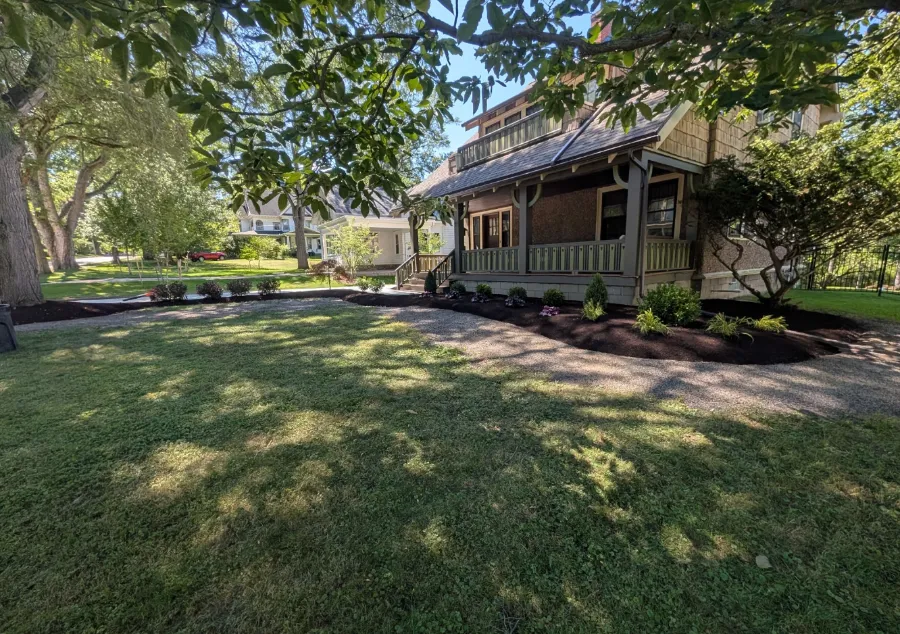
Want the trench fixed and the lawn put back for you? We fill and compact the trench, regrade the disturbed soil, add topsoil and finish with seed or sod blended into the existing lawn. The estimate is free.
How long after sewer line replacement can you plant grass?
The answer depends on how the trench was backfilled, not on a number of days. A sewer crew digs down to the pipe, swaps it out and puts the soil back. Some crews pack it in layers as they go. Others push the pile back in with a machine and leave a hump on top.
Compacted fill is ready for topsoil and grass almost right away. Loose fill is not. It keeps dropping as water moves through it, and the lawn on top drops too. Our clay soils make this worse, because clay holds water and settles slowly and unevenly. So the first step is to find out how the trench was filled, then plan the planting date around that.
How long does it take for dirt to settle after sewer line replacement?
Loose backfill usually settles over several weeks to a full season. Heavy rain, snowmelt and freeze-thaw cycles all speed it up, but they rarely do it evenly. One end of the trench may sink while the other stays high.
You can help it along. Soak the trench with a hose a few times, let it dry, and watch where it drops. Lay a long straight board across the trench to see the low spots. When the surface stops changing between soakings, it is close to done.
If you would rather not wait, the trench can be dug out on top, compacted with a plate tamper and regraded. That takes most of the guesswork out and lets the lawn go in sooner.
The soil in the trench matters more than the seed
When a sewer line is dug, the layers of your yard get mixed together. Dark topsoil ends up buried. Heavy subsoil, gravel, stones and chunks of old pipe end up on the surface. Grass seed sown on that mix comes up thin and patchy, and sod roots struggle to reach anything useful.
Before anything is planted, the stones and debris need to come out and the surface needs real topsoil. The grade should also tip water away from the house, not toward it. A trench that runs from the foundation to the street is a perfect path for water if it is left low. Getting this part right is what keeps the repair from showing next spring.
Seed or sod over a sewer trench
Both work on a well prepared trench. Seed costs less and blends into the lawn around it as it fills in, but it needs steady watering and a few weeks before it looks finished. It also washes out easily on a slope or a fresh strip of bare soil after a hard rain.
Sod covers the scar the day it goes down. It holds the soil in place and is usable much sooner, which helps on a front yard or a trench that crosses a walkway. The catch is matching color and texture to the grass around it. Our guide to sod vs seed in Western New York covers the tradeoffs in more detail.
Matching the repair to the season
Sewer work happens whenever the pipe fails, so the season is rarely your choice. Late summer into early fall is the easiest time to seed a trench here. Spring works too, once the soil dries out enough to work without turning to paste.
Summer repairs can be seeded, but they need a lot of water. Sod is the easier pick in the heat. If the line is replaced in late fall, the trench can still be filled, compacted and graded before the ground freezes. Then it can be seeded the following season, or sodded while the ground is still workable. See when to plant grass seed in Western New York for the timing in more detail.
What we do after the plumber leaves
Lawn repair after sewer work is a regular job for our crew around West Seneca and the Southtowns. We fill and compact the trench, regrade the disturbed area, spread topsoil and finish it with seed or sod blended into the existing lawn. Then we clean up so the yard looks like a yard again.
If you have a trench, a mound or a sunken strip across the lawn, call Patrick at (716) 671-4971 or send a few details through the contact form. We will look at it and give you a free estimate. You can also read more about our yard repair after sewer line replacement.
The short version
- Plant grass once the trench is compacted and graded, not by a set number of days.
- Loose backfill can keep settling for weeks to a full season, especially in clay.
- Stones and buried topsoil are why grass fails over sewer trenches; fix the soil first.
- Sod hides the trench right away; seed costs less but needs time and water.
- Late summer into early fall is the easiest window to seed a repaired trench here.
Quick answers
How do you fix grass after a sewer line replacement?
Remove the stones and debris, fill and compact the low spots, regrade so water runs away from the house, then spread topsoil and seed or sod. Skipping the compaction step is the most common reason the strip sinks again.
Can I put sod down right after sewer work?
Yes, if the trench has been compacted and graded first. Sod laid on loose fill will settle into a dip within a season, so it is worth the extra step.
Why is my sewer trench sinking months after the repair?
The soil was most likely put back loose. Rain and freeze-thaw keep packing it down until it is as firm as the ground around it. Top it up with soil, tamp it and reseed once it stops moving.
Should I water the trench to help it settle?
Soaking it a few times speeds settling and shows you where the low spots are. Let it dry between soakings so you are not working wet clay.
Want this done for you? Patrick comes out, looks at the yard and talks through the options. The estimate is free.