
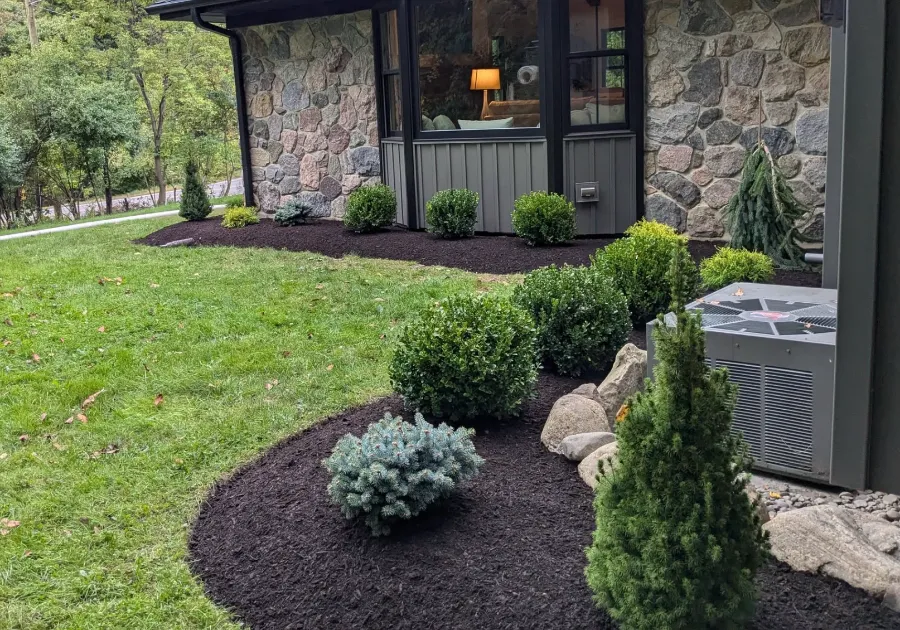
Want a yard that takes less work? We plan beds, plants and hardscape for the way you actually use the yard, with easy edging and upkeep in mind, and our own crew installs them. The consultation is free.
Start with the layout, not the plants
Most of the work in a yard comes from its shape. Lots of small beds, tight corners and islands of grass mean more edging, more trimming around obstacles and more time with the mower.
Combining small beds into fewer, larger ones with smooth curves cuts that work quickly. A mower can follow a gentle curve in one pass. Edging that holds its line, like granite cobblestone or a clean cut edge kept up each season, stops grass from creeping into the beds.
Ask where you actually walk, sit and park. Paths worn into the lawn are a sign a walkway belongs there. Our landscape design process starts with that kind of walk of the property.
Choose plants that fit their space
The biggest maintenance trap is a plant that wants to be bigger than its spot. Fast growers in tight beds need shearing every few weeks and still end up over the windows.
Compact shrub varieties that stop at the size you want are the backbone of an easy yard. Dwarf yews, boxwood, compact spirea, low junipers and panicle hydrangeas handle our winters and need a trim once a year at most.
For perennials, pick ones that thrive on neglect in clay: daylilies, catmint, sedum, coneflower, black-eyed Susan and ornamental grasses. Plant them in drifts of three or five. Fewer kinds of plants, repeated, means one care routine instead of a dozen.
Mulch, stone and when each makes sense
A 2 to 3 inch layer of shredded hardwood mulch is the most useful low-maintenance tool in a planting bed. It blocks weeds, holds moisture through dry spells and only needs a top-up each year.
Decorative stone lasts longer but suits different spots: drip lines, driveway edges, side yards and commercial beds where nothing gets replanted. In a bed full of perennials, stone traps leaves and grows weeds in the gaps once soil settles in.
The commercial installation on our recent jobs page uses decorative stone with new shrubs, each placed with room to grow, for a clean exterior that needs little care. For homes, our guide to the best mulch for flower beds covers the trade-offs.
Replace grass that keeps failing
Every yard has a patch of lawn that never does well: deep shade under a big maple, a steep bank that is hard to mow, a low spot that stays soggy into June. Reseeding it every spring is work that never ends.
Those spots are often easier as something else. A shade bed of hostas and ferns, a planted slope or a wider bed along the fence takes far less effort than grass that is fighting its location.
Where people walk or sit, a paver patio or walkway can replace a worn, muddy strip of lawn for good. Hardscape is the most permanent low-maintenance choice there is, as long as it is built on a proper base that stands up to freeze and thaw.
Fix grade and drainage first
Standing water is a maintenance problem in disguise. On the heavy clay common across the Southtowns, low spots stay wet, grass rots, mulch washes out and weeds move in.
Grading the yard so water moves away from the house and off the beds solves a whole list of chores at once. Beds can be raised slightly and shaped so rain drains off the edges instead of pooling in the middle.
This is groundwork, and it costs less to do before plants go in than after. If water is part of the problem in your yard, a walk of the property will show where it sits and where it needs to go.
What still needs doing each year
Even a well-planned yard in Western New York needs a spring cleanup to clear winter debris and cut back perennials, and a fall cleanup to get leaves off the beds and lawn before the snow.
Mulch needs a top dressing once a year. Shrubs need a trim or two, depending on the plant. Edges need re-cutting so the lines stay crisp.
That is a short list compared with a yard that fights you all summer. Many homeowners handle it themselves. Others hand it off to landscape maintenance so the yard stays the way it was designed without giving up their weekends.
The short version
- Fewer, larger beds with smooth curves cut edging and mowing time.
- Choose compact plants that stop at the size you want.
- Use mulch in planting beds and stone for drip lines and edges.
- Swap failing patches of lawn for beds or hardscape.
- Low maintenance still means two cleanups, a mulch refresh and a trim.
Quick answers
What is the lowest maintenance landscaping?
A simple layout of a few large mulched beds with compact shrubs and tough perennials, clean edging, and hardscape where foot traffic wears out the lawn.
Is rock or mulch lower maintenance?
Rock lasts longer but traps leaves and grows weeds once soil settles in. In planting beds, mulch is usually less work overall. Rock fits drip lines, driveways and side yards.
What are low maintenance plants for Western New York?
Dwarf yews, boxwood, low junipers, compact spirea and panicle hydrangea for shrubs; daylily, catmint, sedum, coneflower and ornamental grasses for perennials.
Can you convert my existing yard to low maintenance?
Yes. Good mature plants can stay, overgrown ones come out, and beds can be reshaped and edged. The consultation and estimate are free.
Want this done for you? Patrick comes out, looks at the yard and talks through the options. The estimate is free.