
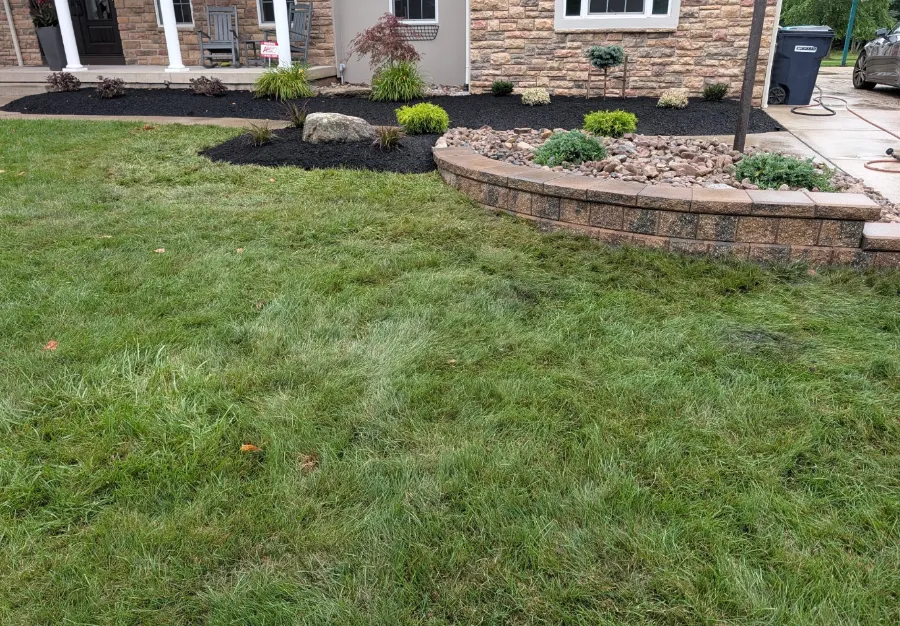
Planning a wall for a slope or a bed? We build retaining walls with the excavation, base and compaction done before the first course goes down, so they hold up through freeze and thaw. The estimate is free.
Why water is the real load on a wall
A retaining wall holds back soil, but soil alone is rarely what knocks one over. Water is. When rain and snowmelt soak the ground behind a wall and have nowhere to go, the soil gets heavier and the water itself presses on the back of the block.
That pressure builds with height. A short bed wall may shrug it off. A wall holding a real slope can be pushed out of line in a single wet spring. This is why retaining wall drainage is not an add-on. It is part of how the wall is designed, from the first shovel of base to the last course of cap.
Clay soil and freeze-thaw in Western New York
The Southtowns sit on a lot of heavy clay. Clay holds water for a long time and drains slowly, which means the soil behind a wall can stay wet for weeks after a thaw or a long rain.
Then winter adds a second force. Wet soil expands as it freezes, pushing on the wall from behind and lifting it from below. Each thaw lets it drop back, not always evenly. Over a few winters, a wall with poor drainage starts to tip, gap or bulge. Getting water away from the back of the wall and out from under the base is the main defense against both problems.
What good retaining wall drainage includes
It starts under the wall. The line is dug out and a compacted stone base goes in, so the first course sits on something that drains and does not shift.
Behind the block, clean crushed stone fills the space instead of clay. Water falls through it to the bottom rather than pressing on the wall. Fabric between the stone and the native soil keeps clay from clogging it over time. At the bottom, the water needs a way out, often a perforated pipe on taller walls that holds wet soil, or a route to daylight at the ends. A cap of compacted soil at the top, sloped away, keeps surface water from pouring straight down the back of the wall.
Signs a wall has a drainage problem
Walls usually warn you before they fail. Look for a wall that leans out at the top, a face that bulges in the middle, or blocks that have shifted out of line.
Other clues: soil or fine silt washing out between blocks or at the base, damp staining on the face long after a rain, and the ground behind the wall sinking or cracking. Water ponding at the top of the wall in spring is another warning, as is a soggy strip at the bottom that never dries. A wall showing several of these at once is usually holding more water than it was built for.
Grading above and below the wall
Drainage is not only behind the block. The ground above the wall should be shaped so runoff heads around it or across the yard, not straight over the top. Downspouts should not empty right behind a wall.
Below the wall, the water that drains out has to go somewhere sensible, away from the house and not into a neighbor's yard. Often the wall and the grade are planned as one job, so the whole slope works together. Our yard grading work reshapes the ground so water moves where it should, and the area around the wall can then be seeded or sodded.
Fixing or rebuilding a failing wall
A wall that has only started to lean can sometimes be helped by easing the water problem above it, such as moving a downspout or regrading the top. A wall that has bulged or split usually needs the affected section taken down and rebuilt, this time with a proper base and drainage stone behind it.
Patrick looks at slope and drainage on the first visit, before suggesting anything. You get a plain answer on what the wall needs and a free estimate. Call (716) 671-4971 or send us the details. See our retaining walls for the Grand Island job, where four new walls reshaped a set of island beds.
The short version
- Water behind the wall, not the soil alone, is what pushes most walls over.
- Clay soil stays wet and swells when frozen, which makes drainage critical here.
- Good walls have a compacted base, clean stone backfill and a way for water to leave.
- Leaning, bulging and soil washing out at the base are early warning signs.
- Grade the ground above and below the wall so runoff goes around it.
Quick answers
Do retaining walls need a drainage pipe?
Many do, especially taller walls holding wet soil. A short bed wall may only need drainage stone behind it and a sound base. The height and the site decide.
What kind of gravel goes behind a retaining wall?
Clean, angular crushed stone that water can move through. Clay, topsoil or sand behind the block holds water and adds pressure.
Why is my retaining wall leaning?
Usually water pressure behind it, frost pushing on wet soil, or a base that was too thin. Leaning tends to get worse each winter, so it is worth a look early.
Should water come out of the bottom of a retaining wall?
Yes, a little after rain is a good sign the drainage is working. Mud or soil coming out with it means the fabric or stone is not doing its job.
Want this done for you? Patrick comes out, looks at the yard and talks through the options. The estimate is free.