
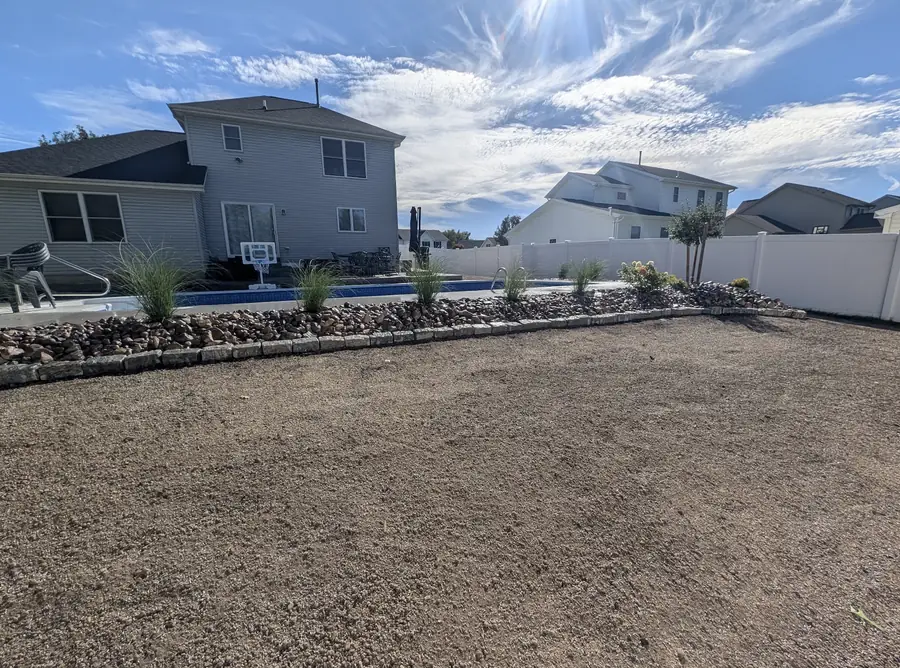
Is the whole yard uneven or draining the wrong way? That is a job for grading equipment. We grade rough, rocky yards smooth, slope them away from the house and leave them ready for seed, sod or beds.
Figure out what kind of uneven you have
Not every bumpy yard needs the same fix. Walk the lawn and sort the problems. Shallow dips that you feel more than see are one kind. Deeper holes, ruts from vehicles and sunken trenches are another. Then there are big humps, rocky patches and slopes that run the wrong way.
A few stakes and a string line help. Tie the string level between two stakes and measure down to the ground at several points. You will quickly see where the low and high areas are, and whether the yard falls toward the house or away from it. That last point decides whether this is a lawn job or a grading job.
Topdressing shallow low spots
For shallow dips, topdressing is the easy fix. Mix screened topsoil with some sand or compost, spread a thin layer over the low spot and work it in with the back of a rake. Keep it thin enough that grass blades still poke through.
Water it in, let the grass grow up through it, and repeat a few weeks later if the dip is still there. Spring and early fall are good times, when the grass is growing strongly. This method is slow on purpose. Dumping a thick pile of soil on the lawn smothers the grass, and you trade a dip for a bare patch.
Lifting sod for deeper dips
When a low spot is too deep to topdress, cut the turf in an H or square with a flat spade and peel it back. Fill the hole with topsoil, tamp it firm, and check it with a straight board laid across the area.
Lay the turf back down, press it in and water well. It should knit back in a few weeks. The same trick works in reverse for a small hump: lift the turf, scrape out the extra soil and replace it. Once a dip gets bigger than a few strips of turf, or keeps coming back, something under it is still settling, such as an old trench or buried debris.
When the whole yard needs regrading
Some yards are past patching. Ground that slopes toward the foundation, a yard left rocky after construction, or a lawn full of humps and wet spots needs regrading. That means stripping or adding soil, shaping the whole area with equipment and pitching it so water runs away from the house.
In one of our jobs, the backyard beside a new pool had been left as packed rock and dirt. We graded it smooth, built a river rock bed along the pool and left the yard ready for lawn. Our yard grading page has the before and after photos. Rock and debris come out, topsoil goes in and the slope is set before anything is planted.
Clay soil, frost and timing in Western New York
Heavy clay is the main thing that makes leveling tricky here. Worked while wet, it smears and packs into a hard, airless layer that grass hates. So grading waits for the soil to dry out enough to crumble, not stick.
Early spring is often too muddy, and frost can still be coming out of the ground. Late spring works once things dry. Fall is often the sweet spot, because the soil is workable and still warm enough for new seed to root before winter. Freeze-thaw over the winter can also reveal soft spots, so a yard leveled in fall should get a quick look the next spring.
Finishing with seed or sod
Leveling is only half the job. The new surface needs grass, and bare soil left over the winter washes out fast. Once the grade is set, the top layer is raked smooth and either seeded or sodded.
Seed costs less and suits large areas when the timing is right. Sod gives a finished lawn right away and holds the soil on slopes. Either way, keep it watered until it roots, and stay off it while it takes. If your yard needs more than a weekend with a rake, call (716) 671-4971. Patrick will walk the yard, check how the water moves and give you a free estimate.
The short version
- Check whether the yard slopes toward the house before you start; that decides the fix.
- Topdress shallow dips in thin layers so the grass grows through.
- Lift the turf, fill and replace it for deeper holes and small humps.
- Regrade the whole yard when it holds water, slopes the wrong way or is full of rock.
- Never grade wet clay; late spring and fall are the usual windows here.
Quick answers
What is the easiest way to level a bumpy lawn?
For shallow bumps and dips, topdress with a thin layer of soil and sand, rake it in and let the grass grow through. Repeat as needed.
Can I level my yard myself?
Small dips, yes. A yard that slopes toward the house, holds standing water or is full of rock usually needs equipment and a crew to regrade it properly.
Should I level my yard in spring or fall?
Either works once the soil is dry enough to crumble. Fall is often ideal here, because you can grade and seed while the soil is still warm.
How do I fix a yard that slopes toward my house?
That takes regrading: moving soil so the ground falls away from the foundation, then finishing it with seed or sod. It is a job worth a free estimate.
Want this done for you? Patrick comes out, looks at the yard and talks through the options. The estimate is free.