
What frost heave does to a patio
Frost heave happens when water in the soil freezes and expands. Clay is the worst for it, because it holds water and drains slowly. Much of the Southtowns sits on heavy clay, and lake-effect snow means a lot of melt soaking into the ground all winter.
As the wet soil freezes, it lifts whatever sits on it. When it thaws, it drops back, and not always evenly. Over a few winters that shows up as wobbly pavers, low corners and joints opening up. A good base keeps water from sitting under the patio and spreads the load, so the surface moves less and settles back flat.
What goes under paver stones
A paver patio is a layered system. First the topsoil and clay are dug out to a depth the site calls for. In many yards a layer of fabric goes down to keep soil from mixing into the stone.
Next comes crushed stone, spread and compacted in lifts so it locks together. A thin, smooth bedding layer goes on top, and the pavers are set into it. Edge restraint along the outside keeps the pavers from drifting. Last, the joints are filled. Each layer has a job. The stone carries the weight and lets water move through, the bedding layer gets each paver level, and the edging holds the whole thing tight.
Why pavers should never sit directly on dirt
It is tempting to set pavers straight on leveled soil, especially for a small patio or path. In our climate it does not last. Bare soil holds water, freezes and moves. Within a season or two the pavers rock, sink and spread apart.
Soil also stays soft when wet, so every footstep pushes pavers down a little. Weeds come up through the joints. Even a garden path does better with a few inches of compacted stone under it. For a patio that holds furniture and people, a proper base is not optional. Our guide to paver patio cost explains why that prep is worth the money.
Polymeric sand, pea gravel and joint choices
Polymeric sand is fine sand mixed with a binder that hardens after it is wetted. It holds the joints firm, slows weeds and keeps ants from digging. It works well here when it is put in on a dry day and wetted correctly. Put down damp or overwatered, it can haze the surface or stay soft.
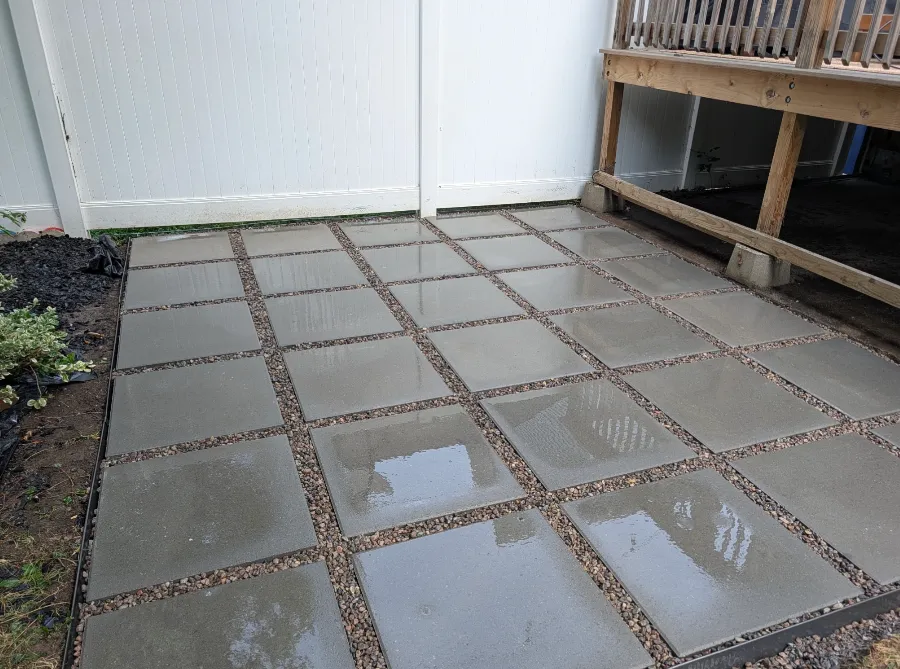
Over time, plowing, shoveling and melt can wear the top of any joint, so topping up every few years is normal. Wider joints can also be filled with stone. One of our recent patios used large pavers with pea gravel glued into the gaps, a look that drains freely and handles the freeze well.
Road salt, shovels and snow blowers
Salt does not destroy good pavers, but it does add wear. Rock salt can speed up surface wear on some concrete pavers, and salty melt in the joints adds to freeze-thaw stress. Shovel first, then use as little ice melt as the job needs.
Plastic-edged shovels and snow blowers with their skid shoes set a little high are kinder to the surface and the joints. Sweep up leftover melt and grit in spring. If you would rather not clear it yourself, snow removal in West Seneca is handled through The Big Freeze LLC, Patrick's winter company. See our snow removal page for driveways and walkways.
When to seal pavers
Sealing is optional. It can deepen color, make stains easier to wipe up and help lock joint material in place. It is not a fix for a bad base.
If you seal, wait until the patio has been through some weather and any white haze on the surface has faded. Pick a dry stretch of warm weather, usually late spring or summer, when the pavers and joints are fully dry. Follow the paver maker's guidance on products and timing, since some pavers are not meant to be sealed. Most sealers wear off over a few years, so plan to clean and reseal when water stops beading on the surface.
A quick spring check
Once the snow is gone, walk the patio. Look for pavers that rock underfoot, corners that dropped, joints that washed out and water that sits after a rain.
Small spots can be lifted, re-bedded and reset. Joints can be topped up. If whole areas sank, the base underneath is usually the issue, and that section needs to come up. Water pooling against the house or on the patio often points to a grade problem in the yard around it. We look at both on a free visit. Call (716) 671-4971 and Patrick will come out and take a look.
The short version
- Frost heave starts with wet clay under the patio, so the base does the real work.
- Pavers need compacted crushed stone, a bedding layer and edge restraint, never bare dirt.
- Polymeric sand works well when installed dry; joints need topping up over time.
- Shovel first and go light on salt to slow surface and joint wear.
- Seal only when the pavers are fully dry and any haze has faded.
Quick answers
Can I lay pavers directly on dirt?
Not in Western New York if you want them to stay flat. Soil holds water, freezes and moves, so pavers on bare dirt rock and sink within a season or two.
What do you put under paver stones?
A dug-out area, often a fabric layer, compacted crushed stone, a thin bedding layer and edge restraint. The depth of stone depends on the soil and what the patio will carry.
Does polymeric sand hold up in winter?
Yes, when it goes in dry and is wetted correctly. Plowing, shoveling and melt wear the top over time, so topping up joints every few years is normal.
Is rock salt bad for pavers?
It adds wear, especially to some concrete pavers and to the joints. Shovel first, use as little ice melt as you need, and rinse off leftover salt in spring.
When is the right time to seal pavers?
In a dry, warm stretch, usually late spring or summer, once the pavers are fully dry and any white haze has faded. Check the paver maker's guidance first.
See our paver patios service or call (716) 671-4971.